

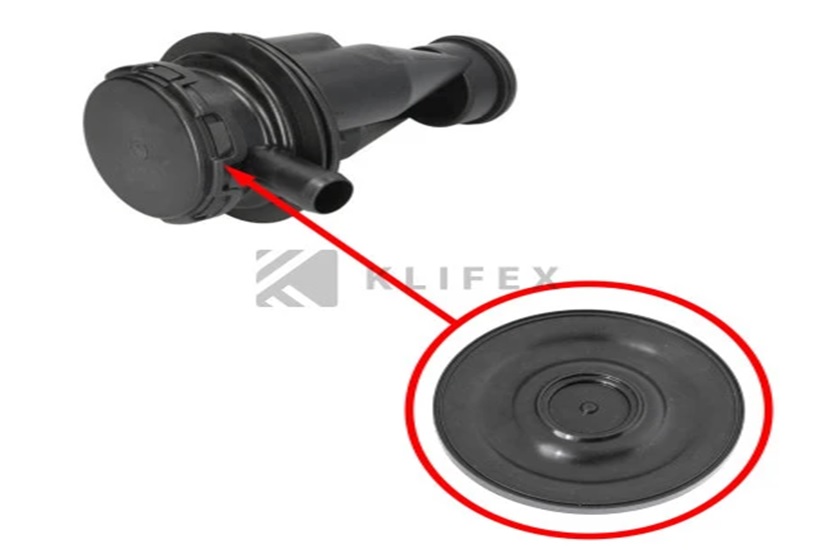
For decades, the valve cover was easy to understand. It sat above the cylinder head, contained engine oil, protected the valvetrain, and provided a mounting point for a gasket. In many contemporary engines, however, that description is no longer sufficient.
Modern valve covers can incorporate crankcase ventilation passages, oil-mist separators, pressure-regulating valves, non-return valves, and other functional elements. MAHLE describes today’s cylinder-head covers as technically complex assemblies capable of integrating several of these systems within a single component.
Among the smallest parts inside some of these assemblies is the valve cover diaphragm. Its dimensions may be modest, but its influence on crankcase pressure and ventilation can be considerable.
How the Valve Cover Became a Functional Engine Component
Traditional valve covers were primarily mechanical enclosures. Modern engine design has moved towards functional integration, meaning several related tasks are packaged into one assembly rather than distributed among separate external components.
This approach can reduce component count, save space, lower weight, and simplify engine packaging. MAHLE notes that modern thermoplastic cylinder-head covers may incorporate oil-mist separators, pressure-regulating valves, non-return valves, and even vacuum reservoirs.
Where the Diaphragm Fits Into the System
On applicable engines, the diaphragm forms part of the crankcase ventilation or pressure-regulation mechanism integrated into the cover.
Combustion gases inevitably pass the piston rings in small quantities and enter the crankcase. These blow-by gases need a controlled exit route. Modern ventilation systems typically direct them towards the intake, while oil-separation components remove much of the suspended lubricant before the gases continue.
The diaphragm reacts to pressure differences within this system. Working with passages, valves, or springs depending on the design, it helps regulate ventilation flow and maintain appropriate crankcase pressure.
This is the mechanical context in which valve cover diaphragms for cars should be understood. Klifex lists these membranes for a broad range of manufacturers and engine families, reflecting how frequently pressure-regulating components are now incorporated into valve-cover assemblies.
Why Pressure Regulation Matters
The crankcase cannot simply be left open, nor should it operate under uncontrolled vacuum or excessive positive pressure.
Too much crankcase pressure can encourage oil to escape through seals and gaskets. Excessive vacuum can also create undesirable operating conditions, including abnormal airflow through the ventilation circuit.
The diaphragm therefore contributes to balance rather than merely opening or closing a passage. It must respond as intake pressure and engine load change, allowing the ventilation system to work across different operating conditions.
This function becomes particularly important on engines where the pressure-regulating mechanism and oil separator are packaged together inside the cover.
What Causes a Valve Cover Diaphragm to Deteriorate?
The environment beneath a valve cover is demanding. Heat rises and falls repeatedly as the engine warms and cools, while the diaphragm remains exposed to oil vapour, combustion by-products, and continual pressure fluctuations.
Over time, elastomer materials can lose flexibility. MAHLE notes that high temperatures, pressure, and aggressive oil mist can make diaphragms and seals within oil-separation systems brittle, preventing them from operating as intended.
A membrane may eventually develop a small split, lose elasticity, or fail to seal correctly. Because the component works through pressure differences, even relatively minor damage can alter its behaviour.
Why a Small Tear Can Produce Noticeable Symptoms
A compromised diaphragm can disturb the carefully controlled relationship between the crankcase and intake system.
Depending on engine architecture and the nature of the failure, the driver may encounter whistling or hissing noises, unstable idle, unusual crankcase vacuum, increased oil consumption, or oil leakage around seals and gaskets.
These symptoms are not exclusive to diaphragm failure. A cracked ventilation hose, blocked breather passage, defective PCV valve, excessive blow-by, or damaged valve-cover housing can create similar effects.
Why Entire Valve Covers Are Sometimes Replaced
Functional integration has one obvious disadvantage from a repair perspective: manufacturers may design internal ventilation components as part of a complete valve-cover assembly.
If the diaphragm fails, the original repair procedure may therefore specify replacement of the entire cover even when the outer structure remains intact.
Component-level repair can be reasonable on suitable designs when the diaphragm is separately accessible and the surrounding housing, spring, passages, valves, and sealing surfaces remain serviceable. Klifex’s catalogue includes standalone valve-cover membranes for numerous applications, illustrating this repair approach.
The critical step is establishing that the membrane is genuinely the failed component.
What Else Should Be Checked?
A diaphragm problem should prompt inspection of the wider valve-cover and crankcase ventilation system. Breather hoses should remain unobstructed and airtight, oil-separation passages should be clear, and the cover itself should be checked for distortion or cracking.
The main valve-cover gasket also deserves attention. A pressure problem can aggravate an existing gasket weakness, meaning both the leak and its underlying cause may need correction.
Conclusion
The modern valve cover has evolved far beyond its original role as a simple protective lid. By integrating ventilation, oil separation, and pressure-control functions, it has become an active part of engine management.
The diaphragm represents this evolution particularly well. Its movement helps regulate crankcase ventilation, yet ageing or damage can influence oil control, airflow, and engine behaviour. Understanding that broader role makes it easier to diagnose valve-cover problems accurately rather than treating every symptom as nothing more than a leaking gasket.
